AOSK, STAKEHOLDERS AND PARTNERS MARK 25 YEARS OF CHEMICHEMI YA UZIMA
The AOSK Board, Superiors and representatives of member congregations, partners and stakeholders joined the Chemichemi Ya Uzima College community to celebrate 25 years of the institution, founded in September 2001 as Chemichemi Ya Uzima Institute.
Held under the theme “25 Years of Pilgrimage in Hope,” the Silver Jubilee celebrations on Saturday, September 26, 2026, brought together those who have been part of Chemichemi’s story as students, formators, staff, alumni, partners, benefactors and friends of the institution.
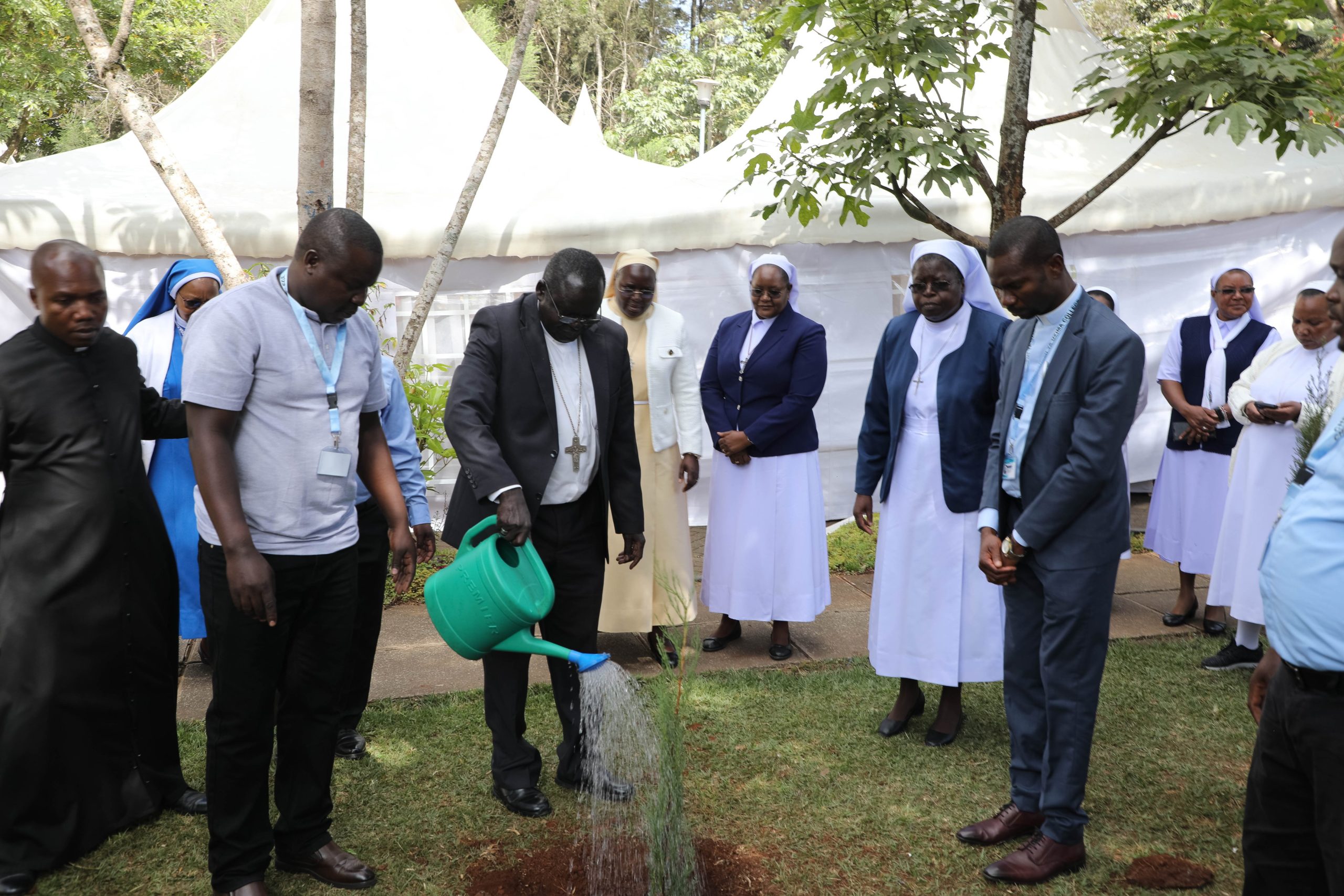
The celebrations were led by AOSK Chairperson Sr. Prof. Jacinta Adhiambo, MCESM, and AOSK Executive Secretary Sr. Pasilisa Namikoye, LSOSF. The event was graced by Bishop Hieronymus Joya of the Catholic Diocese of Maralal, who also serves as Chairperson of the Commission for Clergy and Religious at the Kenya Conference of Catholic Bishops (KCCB).
“The Greatest Evidence of Hope Is: We Kept Walking”
Reflecting on Chemichemi’s 25-year journey, Sr. Prof. Jacinta described an institution shaped by faith, perseverance, transformation and trust in God’s providence. She traced the dream behind Chemichemi to 1972, noting how an idea gradually grew into what she described as a “Fountain of Life,” serving thousands through programmes in sabbatical formation, spiritual renewal, counselling, spiritual direction, vocation promotion, chapter facilitation and leadership formation.
“The greatest evidence of hope is: We kept walking.”
The AOSK Chairperson recognised the contributions of more than 190 congregations of women religious, founders, formators, staff, development partners, donors, benefactors, collaborators and alumni who have sustained the institution over the years.
Drawing from the disciples’ journey to Emmaus, she reminded the Chemichemi community that Christ accompanies His people even through uncertainty.
“Christ does not always remove us from the road. Sometimes He meets us on the road. He walks with us through uncertainty.”
As Chemichemi enters another chapter, she challenged the College to remain attentive to the changing needs of the Church and society by developing programmes that respond to emerging realities while forming people with resilience, integrity and a spirit of service.
She also called for greater collaboration and shared discernment in leadership, saying:
“Leadership in religious life must increasingly move from control to collaboration, from isolation to communion, and from decision-making alone to shared discernment.”
She urged Chemichemi to live up to the meaning of its name by remaining a source of renewal for every generation.
“A wellspring does not run dry. It adapts to seasons, it flows into new channels, it quenches the thirst of every generation.”
Formation Must Lead to Service
In his homily, Bishop Joya recognised the congregations, trustees, partners and well-wishers who have supported the institution spiritually and materially. He also paid tribute to the sisters whose dedication and sacrifice helped build Chemichemi, including those who have since died.
Drawing from his experience of meeting sisters who had passed through the institution and gone on to serve in different dioceses and communities, Bishop Joya praised Chemichemi’s contribution to forming people for service to the Church and society.
“This is a quarter century of changing lives in new communities and raising up mission disciples who act as the salt of the earth and the light of the world.”
He challenged the College to look beyond what it has already achieved and broaden its programmes to respond to emerging needs.
“This institution, dear brothers and sisters, prepares you to be people who can do charity and bring justice to society.”
Bishop Joya also welcomed the construction of the Sabbatical Centre at Matasia, Ngong, as part of Chemichemi’s continued development, noting that it would address an important need in the Church.
Building on 25 Years of Growth
For Chemichemi Ya Uzima College Director Sr. Luciana Wanyahoro, VDM, the Jubilee was first a moment of thanksgiving for God’s faithfulness and guidance from September 2001 to September 2026.
She highlighted the College’s growth in programmes, students, staff, infrastructure, governance and partnerships, while pointing to its thousands of alumni as one of its most significant achievements.
“One of the greatest achievements of this journey is the thousands of alumni who have passed through the College.”
These alumni have taken the knowledge, skills, formation and values gained at Chemichemi to different parts of Kenya and beyond. Sr. Luciana also pointed to the introduction of TVET programmes in 2025 as an opportunity for young people and lay people to access relevant education and skills.
“Our achievements are therefore not the work of one person or one generation. They are the result of people and institutions working together towards a shared mission.”
Turning the New Plan into Action
The Silver Jubilee also marked the launch of the Chemichemi Ya Uzima College Strategic Plan 2027–2031, providing the institution with a framework for its next five years.
Presenting the direction of the plan, AOSK Executive Secretary Sr. Pasilisa Namikoye, LSOSF, said it comes at a time when the needs of the Church, religious life and society are changing and require institutions such as Chemichemi to keep learning and responding.
The plan focuses on strengthening the quality and relevance of programmes, institutional systems, partnerships, research, innovation and sustainability. It also provides a framework for strengthening Chemichemi as an institution capable of responding to the changing needs of those it serves.
Sr. Pasilisa emphasised that the plan should not remain a document but should guide the everyday work of the College.
“A strategic plan becomes meaningful only when it is translated into daily decisions, responsible actions and measurable results.”
She called on the wider Chemichemi community—including the leadership, staff, learners, member congregations, Church institutions, partners and friends of the College—to take ownership of the plan and contribute to its implementation.
For Sr. Pasilisa, the work ahead remains centred on people and their formation.
“Our work is ultimately about people.”
The plan therefore places Chemichemi’s next five years within the wider responsibility of forming people who are intellectually, spiritually and professionally prepared for service.