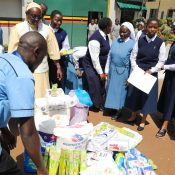
Through the Association of Sisterhoods of Kenya, AOSK, sisters are receiving the knowledge, skills and confidence they need to respond to safeguarding concerns and champion the protection of children. Catholic sisters in Kenya play a critical and transformative role in safeguarding children, vulnerable adults, and marginalized communities.
Rooted in the Gospel values of compassion, justice, dignity, and respect for human life, sisters are at the forefront of creating safe environments where everyone can live, learn, work, and worship free from abuse, exploitation, neglect, and harm. Through their ministries in schools, healthcare facilities, children’s homes, parishes, and community outreach programmes, sisters provide care, guidance, advocacy, and protection to those most at risk. Their close connection with communities enables them to identify safeguarding concerns, offer support to survivors, raise awareness, and promote a culture of prevention, accountability, and respect.
Everyone deserves to feel safe, and to be protected. And every child deserves a future filled with hope. But in many communities, these simple rights remain a daily struggle. Children face abuse, neglect, early marriage, insecurity and other threats that stand in the way of their growth and development.
Across Kenya, Catholic sisters are standing in the gap, protecting children, raising awareness and helping communities build safer environments for the young and vulnerable. And today, that work is receiving national recognition.
Sr. Aoko Millicent Agolla, LSOSF a teacher at St. Columbans School for the Deaf in Trans Nzoia County, has received a National Award in the Child Protection Championship Awards category during the World Teachers Day 2026 celebrations in Nairobi, graced by His Excellency President William Ruto of the Republic of Kenya. Sr. Millicent was recognized as an outstanding champion in enhancing safeguarding and protection for both children and vulnerable adults in Kenya.
The award is a commanding assertion of what happens when sisters are equipped to protect the vulnerable and transform the communities they serve.
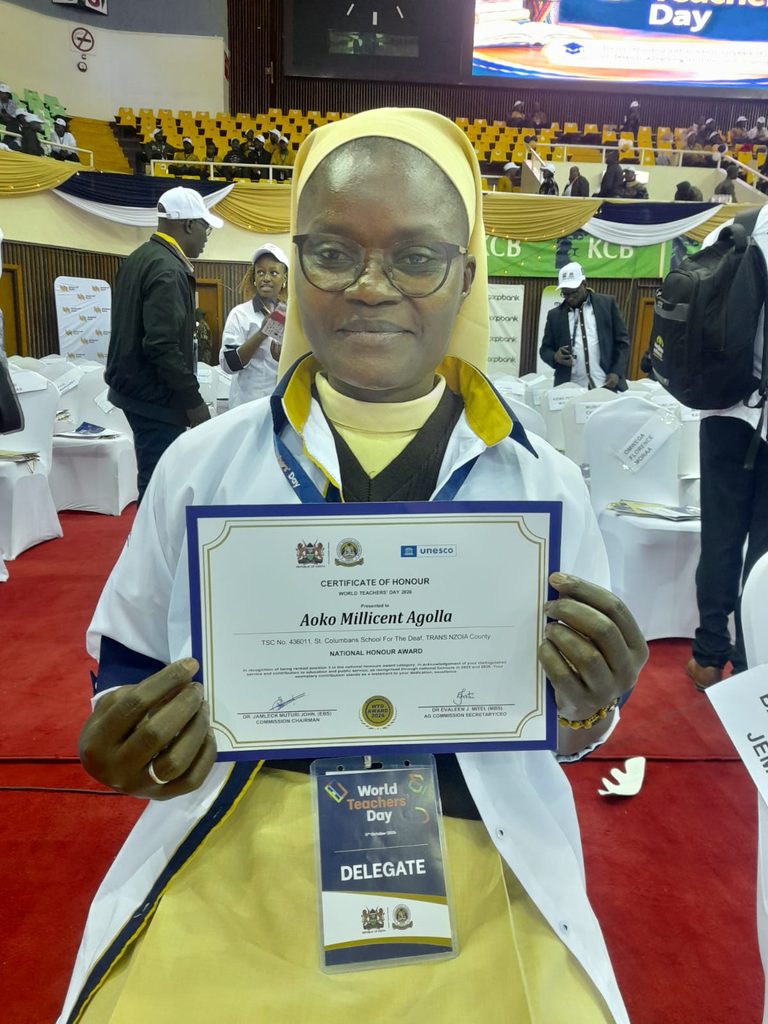
In November 2024, Sr. Millicent was among the sisters who participated in safeguarding training facilitated by AOSK. The training strengthened her understanding of child safeguarding and protection, equipping her to advocate more effectively for children’s rights, safety and wellbeing.
For Sr. Millicent, the knowledge gained did not end in the training room. She carried it into the classroom, the school and the wider communities she has served. Having worked among the Pokot community within the Catholic Diocese of Kitale, she understands the challenges children face in accessing education, particularly girls, whose opportunities are often limited by deep-rooted cultural practices and expectations. Many girls encounter barriers at different stages of their lives, placing their education, safety and future at risk. The boys are not spared either. These realities have strengthened her commitment to child safeguarding, advocacy and creating an environment where every child, can learn, feel safe and realise their full potential.
At St. Columbans School for the Deaf in Kitale where she works, her commitment to child protection is helping create an environment where children feel safer, more valued and more empowered.
The school has recorded an increase in children’s enrolment, alongside improved retention. These gains point to the importance of creating a safe and supportive learning environment where children can attend school, remain in school and participate in their education with confidence.
For children with hearing disabilities, safeguarding is especially important. They need adults who understand their vulnerabilities, listen to their concerns and ensure that their rights are respected. Through her work, Sr. Millicent is helping strengthen that commitment.
For AOSK, Sr. Millicent’s recognition reflects the value of investing in the capacity of sisters who serve on the frontlines of education, healthcare, formation and community development.
Safeguarding is not simply a policy or a set of guidelines. It is a responsibility that must be understood, practised and lived every day. The training provided sisters with the capacity to identify safeguarding concerns, strengthen child protection advocacy and respond more effectively to the realities facing the communities they serve.
Sr. Millicent recognises the importance of this continued investment. She calls for safeguarding knowledge to reach every level of leadership, beginning with top-level management, the superiors and extending to the grassroots communities where children live, learn and grow.
When leaders understand safeguarding, they are better positioned to establish policies, support implementation and ensure that child protection becomes part of the everyday culture of their institutions.
And when this understanding reaches communities and families, the impact can extend far beyond the school gates.
In Samburu County, another great champion responding to a different but equally urgent set of challenges. Sr. Roselyn Lenguris, SMI is a teacher at Suguta Murmar Primary School and also serves as the Chairperson of Maralal AOSK Unit. She was also honored with a national award, in the Child Protection Championship Awards category.
She works in a challenging and volatile environment where insecurity, including banditry attacks involving neighbouring communities, has disrupted lives and heightened the vulnerability of children and families. Her work involves addressing sensitive challenges that may affect the safety and dignity of children and women, including harmful traditional practices, gender-based violence, child neglect, and barriers to education. Through respectful dialogue and collaboration with community structures and relevant authorities, Catholic sisters help challenge harmful practices while working alongside communities to nurture positive change that respects human dignity and children’s rights.
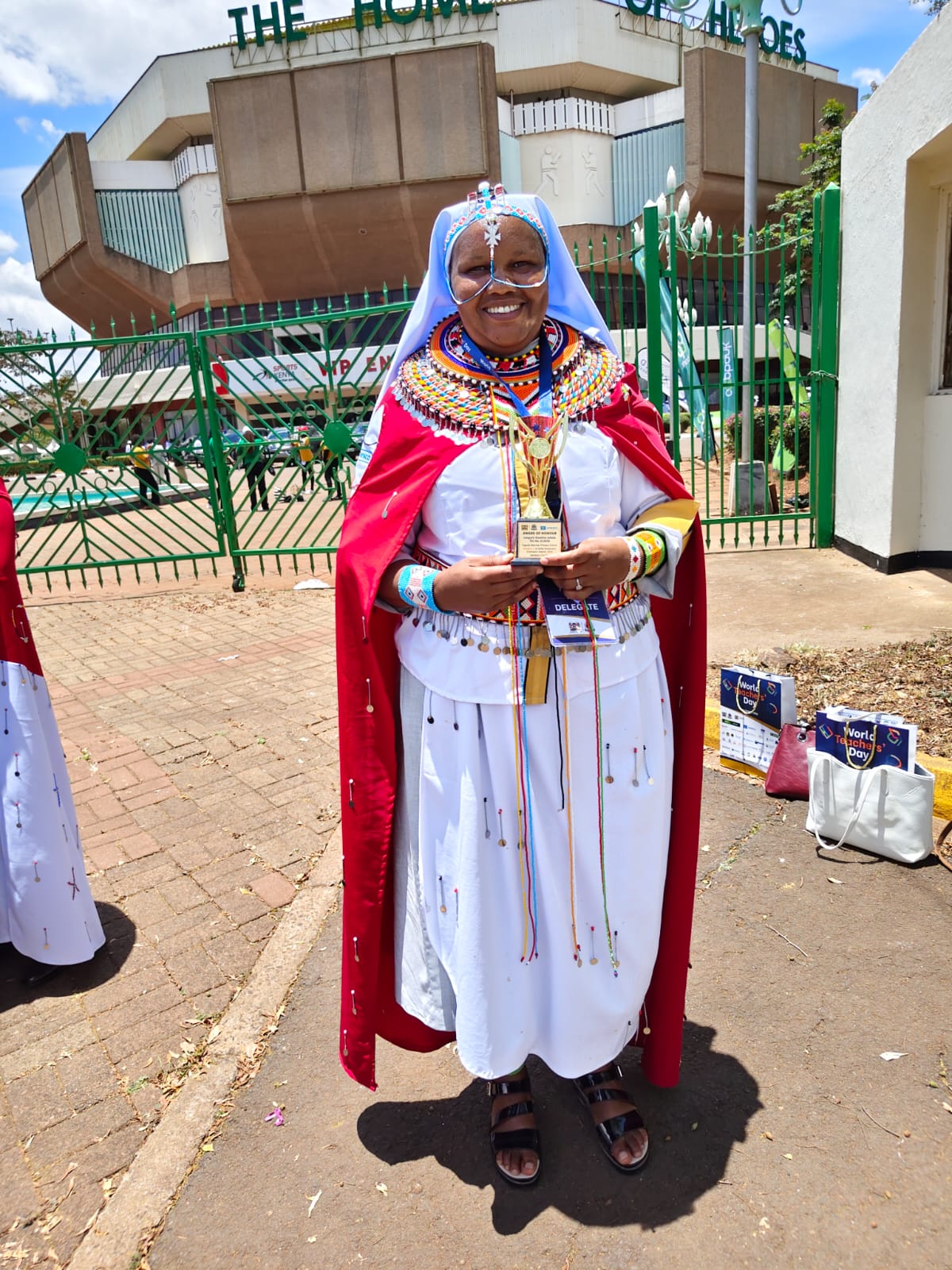
In this context, child abuse, early marriage and other harmful practices remain serious concerns.
For children growing up in such circumstances, protection requires more than awareness. It calls for consistent community engagement, strong local leadership and people willing to stand alongside vulnerable families.
Through AOSK programmes, sisters are going beyond their formal responsibilities to support communities, raise awareness and promote the dignity, safety and wellbeing of children.
Sr. Roselyn’s service represents the commitment of sisters who continue working in difficult circumstances, often where the need is greatest and the challenges are most complex.
Their presence offers an opportunity to strengthen community awareness, encourage the protection of children and promote safer environments for families.
Sr. Millicent’s national recognition is a moment of celebration for her, her school and the communities she serves. It is also a source of pride for AOSK and the wider network of religious women committed to transforming lives. Importantly, AOSK takes an active role in complimenting the work of government to create synergy for a safe environment for all.
The award demonstrates that safeguarding training can contribute to meaningful change when knowledge is put into practice. Yet the work is far from over.
Children continue to face risks that require sustained attention, stronger institutional systems and communities equipped to recognise and respond to safeguarding concerns.
AOSK through the Safeguarding Office is continuing to train more sisters, strengthening their capacity to respond to emerging issues and the changing realities of the communities in which they serve.
From classrooms to rural communities, sisters are putting this knowledge into action, advocating for children’s rights and helping build environments where children can learn, grow and live without fear.
Building a culture of safeguarding requires collective responsibility. Religious institutions, schools, families, communities, government and development partners all have a role to play.
AOSK welcomes collaboration with individuals, organisations and potential development partners who share a commitment to child protection, safe learning environments and the dignity of every child.
Support for safeguarding training, institutional capacity building and community-based initiatives can help equip more sisters with the skills and resources needed to protect vulnerable children.
At AOSK, we believe that safeguarding every child is everyone’s responsibility. And with continued training, stronger partnerships and a shared commitment to protection, we can help build a future where every child and vulnerable others are safe, valued and free to bloom.
The safeguarding mission of Catholic Sisters is a powerful expression of the Church’s commitment to the dignity and protection of every human person. It calls for more than good intentions; it requires concrete action, responsible leadership, transparency, and a willingness to place the safety of the vulnerable above institutional reputation.
Advancing Sustainable Development Agenda
Beyond child protection and safeguarding is another member of AOSK recognised in the Sustainable Development Educator Award category, highlighting the contribution of religious women to environmental conservation and the formation of responsible citizens.
Sr. Mary Goretty Owino, a member of the Franciscan Sisters of Anna (FSSA), received the national Sustainable Development Educator Award.
With 14 years of teaching experience in teaching and environmental sustainability empowering leaners both in academics as well as champions of Sustainable Development, the Biology and Chemistry teacher has served in several schools, including Loreto Convent Msongari, St. Sylvester Madiany Girls Secondary School and St. Mary’s School Lwak Girls Senior School. She currently teaches at St. Augustine Nyamonye Senior School.
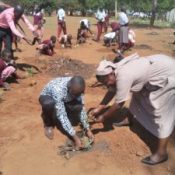
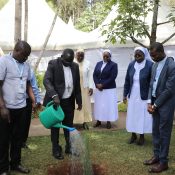
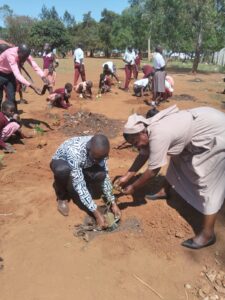
Her recognition celebrates years of work that extends beyond the classroom. Through tree planting, school greening, environmental education and community engagement, she has mobilised learners, fellow teachers, Church groups and community members to take practical action in caring for the environment.
She has participated in planting more than 1,000 trees in various schools across the country and promotes the teachings of Laudato Si’, Pope Francis’ encyclical on the Catholic social teaching on the Care of God’s Creation. Her work also includes waste management awareness, biodiversity protection, school beautification and the cleaning of Church compounds and health facilities.
For Sr. Mary Goretty, environmental conservation is both a practical responsibility and an expression of faith. Inspired by St. Francis of Assisi, she encourages learners to recognise that caring for creation goes hand in hand with caring for humanity, particularly vulnerable communities whose livelihoods are affected by environmental degradation.
Her commitment has also extended to improving learning conditions while promoting environmental sustainability. After noticing that unstable electricity was disrupting ICT lessons for Grade 8 and 9 learners at St. Mary of the Angels Nyamonye Comprehensive School, she developed a project proposal that secured funding for 20 solar panels, with support from the Franciscan Foundation of the Conventual Friars in the United States. The installation has enabled ICT lessons to continue without the previous power interruptions while harnessing clean, renewable solar energy. This environmentally friendly solution not only supports uninterrupted learning but also contributes to reducing reliance on conventional energy sources, demonstrating how practical interventions can advance both educational access and environmental responsibility.
She envisions AOSK playing a greater role in advancing the sustainable development agenda through targeted programmes and capacity development for sisters serving directly in communities. By equipping sisters with the knowledge, skills and practical tools they need, AOSK can strengthen their ability to mobilise communities, promote environmental conservation, encourage responsible use of natural resources and support sustainable development initiatives that respond to local needs. Her vision recognises the unique position of Catholic sisters, whose presence in schools, healthcare facilities and grassroots communities provides an opportunity to turn sustainable development goals into meaningful action that improves lives.